
ePIC backward electromagnetic calorimeter by Chun-Ting KUAN (IJCLab)
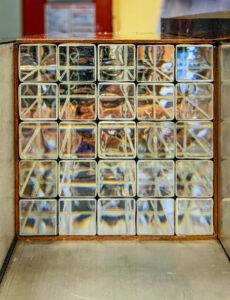
The backward electromagnetic calorimeter (ECal) of the ePIC detector plays a central role in the EIC physics program, in particular for the detection and precise reconstruction of scattered electrons in the backward region. This PhD project focuses on the characterization, simulation, and optimization of the backward ECal performance. The work combines detector studies using a 5×5 lead-tungstate crystal prototype instrumented with SiPM readout, detector simulations within the ePIC software framework, and physics performance studies. Current activities include measurements of the detector energy resolution, linearity, and dynamic range using HGCROC-based readout electronics. In parallel, realistic detector digitization and reconstruction algorithms are being developed, including electron identification and clustering studies. The project also aims to quantify the impact of the backward ECal on a key EIC physics channel, such as diffraction or deeply virtual Compton scattering, using full detector simulations and reconstruction.
Study of the Nucleon Structure Modifications Induced by SRC Nucleon-Nucleon Pairs via DVCS and EEEMCal Prototype Development for the EIC by Lorena BUCURU (IJCLab)
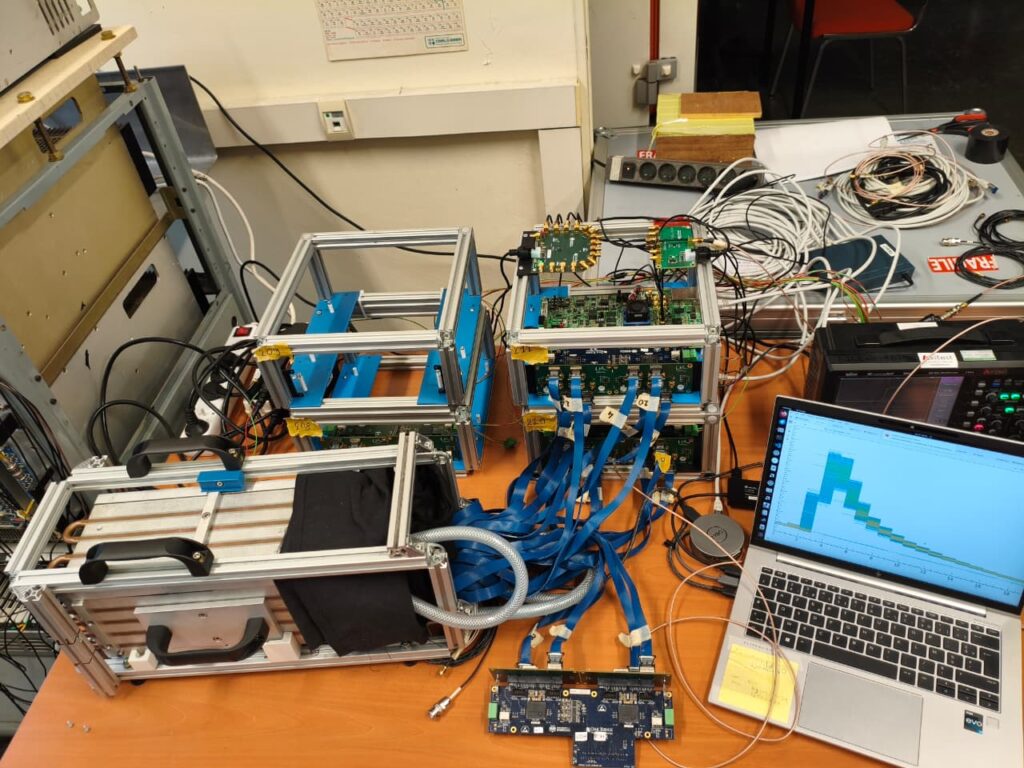
This PhD features two projects that go in parallel. The first one focuses on the study of the internal structure of the nucleon through Deeply Virtual Compton Scattering, DVCS and using CLAS12 data from Jefferson Lab, the project aims to extract the Beam Spin Asymmetry (BSA) for DVCS off a bound neutron in deuterium. Particular attention is given to the high missing momentum region, where short-range correlations (SRC) between nucleons are expected to play an important role and could be related to the well-known EMC effect. The second project focuses on the commissioning and characterization of the electronic readout of a 25-crystal EEEMCal prototype, which includes the development of a channel-by-channel calibration procedure, the optimization of the timing phase, the reduction of electronic noise, and the characterization of the ADC and Time-over-Threshold response using internal charge injection. LED-based measurements are also performed to study the energy resolution as a function of the LED voltage. The performance of the HGCROC, a chip also developed for the CMS experiment at the LHC, is compared with reference oscilloscope measurements, thereby validating the prototype readout chain. Beam tests are also planned to validate the energy resolution under realistic conditions. Together, these studies contribute to the development of the final EEEMCal system for ePIC, which will be crucial for precision measurements of nucleon and nuclear structure at the EIC.